-

Astrobiologists aim to work out how life fits into the wider universe, uniting biology with the planetary and space sciences to draw a unified picture of the cosmos and our place in it. This ambition is, of course, far older than the discipline itself. The atomist philosopher Anaxagoras (c. 510–c. 428 BC) was perhaps the…
-
This blog post discusses a new article that my colleagues and I recently published in the journal, Astrobiology. Those with access to this journal can find the article here. Life on Earth is not limited to the planet’s surface, but reaches high into the atmosphere and deep underground. In the darkness, miles beneath our feet,…
-

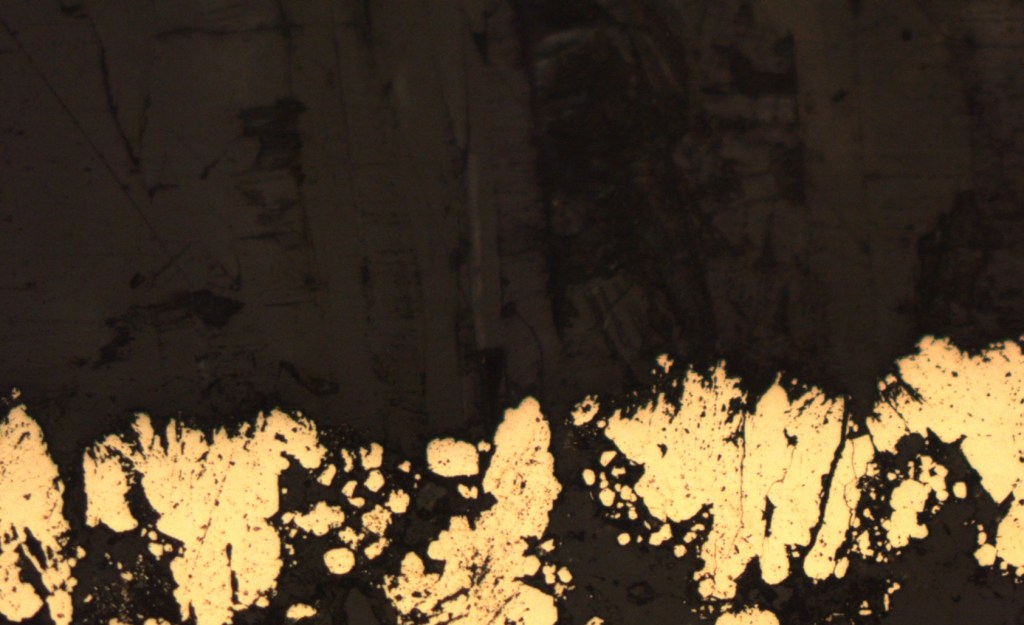
For billions of years, microbes like bacteria have quietly transformed the Earth. They have re-routed the flow of nutrients around our planet, infused the atmosphere with oxygen, and built the biosphere from the bottom up. It is hard to overstate the palaeontological importance of “simple” single-celled micro-organisms. Unfortunately for palaeontologists, however, these small, soft, delicate…
-
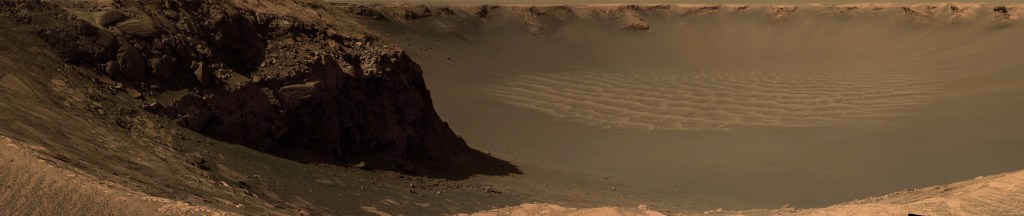
Fossils provide our most decisive evidence for testing hypotheses about the abundance, diversity, and evolution of life on Earth over the past three-and-a-half billion years. They are also our best hope for answering one of the most compelling questions in science: was there ever life on Mars?
-
This week I had two new papers formally published. The first of these, A Field Guide to Finding Fossils on Mars, was written with a host of co-authors from the NASA Astrobiology Institute. This paper aims to help forthcoming NASA and European missions to search for traces of ancient life on the red planet. Three…
-
Is the exploration of space justified by our natural wanderlust? Are we morally obliged to terraform other planets in order to avert stagnation or extinction on Earth? Should we worry about the socio-economic consequences of asteroid mining, or the aesthetic damage done by the extraction of Helium-3 from the moon?
-
Mars has been a wandering star, a vengeful God, and latterly a storied world of shifting greenery, huge canals, carved faces, pyramids, aliens, and warrior princesses. Today, it is hard to see Mars through the haze of these cultural-historical associations. In the midst of this haze, it seems quite reasonable to talk about terraforming. If…
-
(Review for the Astrobiology Society of Britain.) In Lucky Planet, David Waltham argues that Earth’s teeming, complex biosphere is a rare anomaly in an almost sterile cosmos. From the start, he acknowledges that many of us have strong intuitions to the contrary: isn’t Earth just another planet orbiting just another star? There are trillions of…
-
“Though a planetary perspective is a magnificent and enriching thing, places, not planets, are the core of human experience. It is from places that we build our world.” — Mapping Mars, Oliver Morton (2002) “He stood thereby, though ‘in the centre of Immensities, in the conflux of Eternities,’ yet manlike towards God and man; the vague shoreless…
-
Life on Earth isn’t limited to the surface: the biosphere has deep roots. In a new scientific paper in FEMS Microbiology Ecology, my PhD supervisor and I put deep continental biomass on the weighing scales. What’s beneath our feet? Beneath mine: the soles of my slippers; then a thin carpet and some insulated plywood…
-
Subscribe
Subscribed
Already have a WordPress.com account? Log in now.
 Sean McMahon